Walk into a garden that works and you usually can't say why it works. It just feels settled. Walk into one that doesn't, and the discomfort is just as hard to name. Nine times out of ten, the difference comes down to four ideas the designer kept in their head the whole time: proportion, repetition, a focal point, and a route. None of them are about plants. They're about how the space is organised, and they apply equally to a courtyard the size of a parking space and an acre of country lawn.
Proportion Comes First
Before you choose a single plant, you have to get the scale of the spaces right. A path that's 60cm wide feels mean the moment two people try to walk it together; 1.2 metres lets them stroll side by side. A terrace that's big enough for a table but not for the chairs to push back is a terrace nobody uses. I tend to work in real furniture from the start, marking out where a six-seat table actually lands and adding a metre of clearance all round before I even think about borders.
Proportion also governs the relationship between the open and the planted. A common mistake is to plant everything and leave no breathing room. The lawn, the gravel, the still surface of a pool of water, the bare paving, these voids are doing real work. They give the eye somewhere to rest and they make the planting that surrounds them read as deliberate rather than overgrown. As a rough starting point, I aim for roughly a third open space to two-thirds planting in a busy garden, and adjust from there.
Repetition Holds It Together
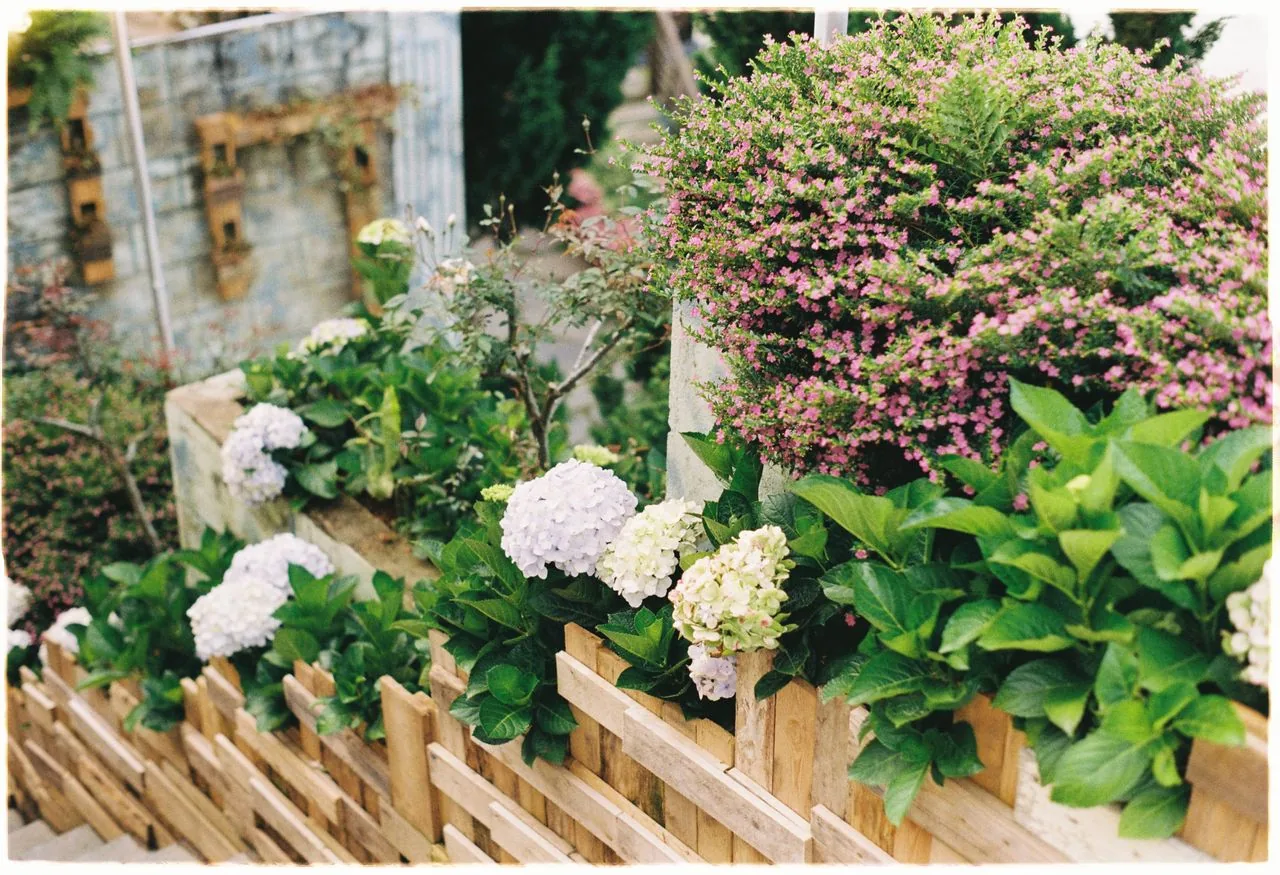
The quickest way to make a planting scheme feel coherent is to repeat. Pick three or four key plants and weave them through the whole garden rather than dotting forty different things around in ones and twos. A single specimen reads as a mistake; the same plant repeated seven times across a border reads as a rhythm. The same logic applies to hard materials. If the paving, the gravel and the edging all speak the same colour language, the garden hangs together even when the planting is doing something wild.
Repetition doesn't mean monotony. You vary the dose. A favourite grass might appear in great drifts at one end and as a single punctuation mark at the other, and the eye joins the dots. That sense of an idea being carried through a space is what separates a designed garden from a collection of plants.
A Focal Point and a Reason to Walk
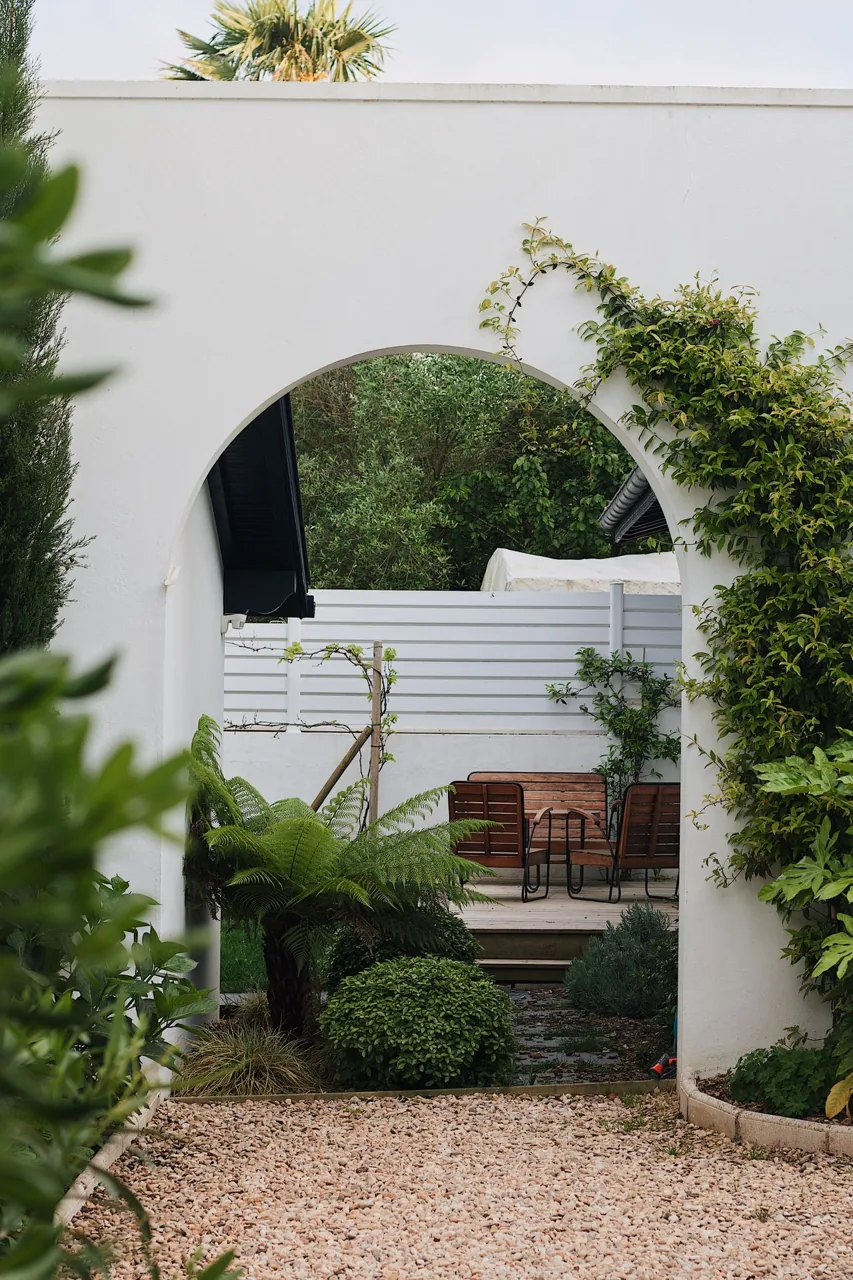
Every garden needs somewhere for the eye to land. It might be a specimen tree, a bench at the end of a path, a simple urn, or a gap in a hedge that promises another space beyond. Without one, the eye wanders and never settles, which is exactly that vague restlessness you feel in a garden that doesn't work. Place the focal point where it terminates a sightline, usually the view straight out from the back door, and the whole garden suddenly has a spine.
Tied to that is the route. People need a reason and a way to move through a garden, even a small one. A path that curves out of sight, a stepping-stone line across the lawn, a change of level marked by a single step, all of these invite you onward. Get proportion, repetition, a focal point and a route working together and most design problems quietly solve themselves. The plants, when you finally choose them, are almost the easy part.