It sounds like a paradox: divide a small garden up and it feels bigger. But it's true, and it's one of the oldest tricks in the book, perfected at places like Sissinghurst and Hidcote and just as effective in a 12-metre town garden. The moment you can't see the whole space at once, your imagination fills in the rest, and a plot you'd written off as cramped starts to feel like somewhere you could get lost in. The idea is the garden room: a series of distinct, enclosed spaces linked by thresholds and views.
Why Enclosure Works
A garden you take in at a single glance has nothing left to offer after that glance. You stand at the back door, see everything, and there's no reason to walk down. Break it into two or three rooms and you create what designers call mystery, the sense that there's more around the corner. Each room can have its own character, too: a sunny gravel terrace for breakfast, a shadier, greener space further down for sitting out the afternoon, a productive corner you don't have to look at from the kitchen window.
The walls of these rooms don't have to be solid or tall. A low clipped box hedge, a run of hornbeam, a simple oak screen, even a change in level or a band of taller planting will do the job. What matters is that the division is felt. Waist height is often enough to suggest an edge without blocking the light; head height creates real seclusion. Mix the two through a garden and you get rooms that range from open and bright to genuinely private.
Thresholds and Flow
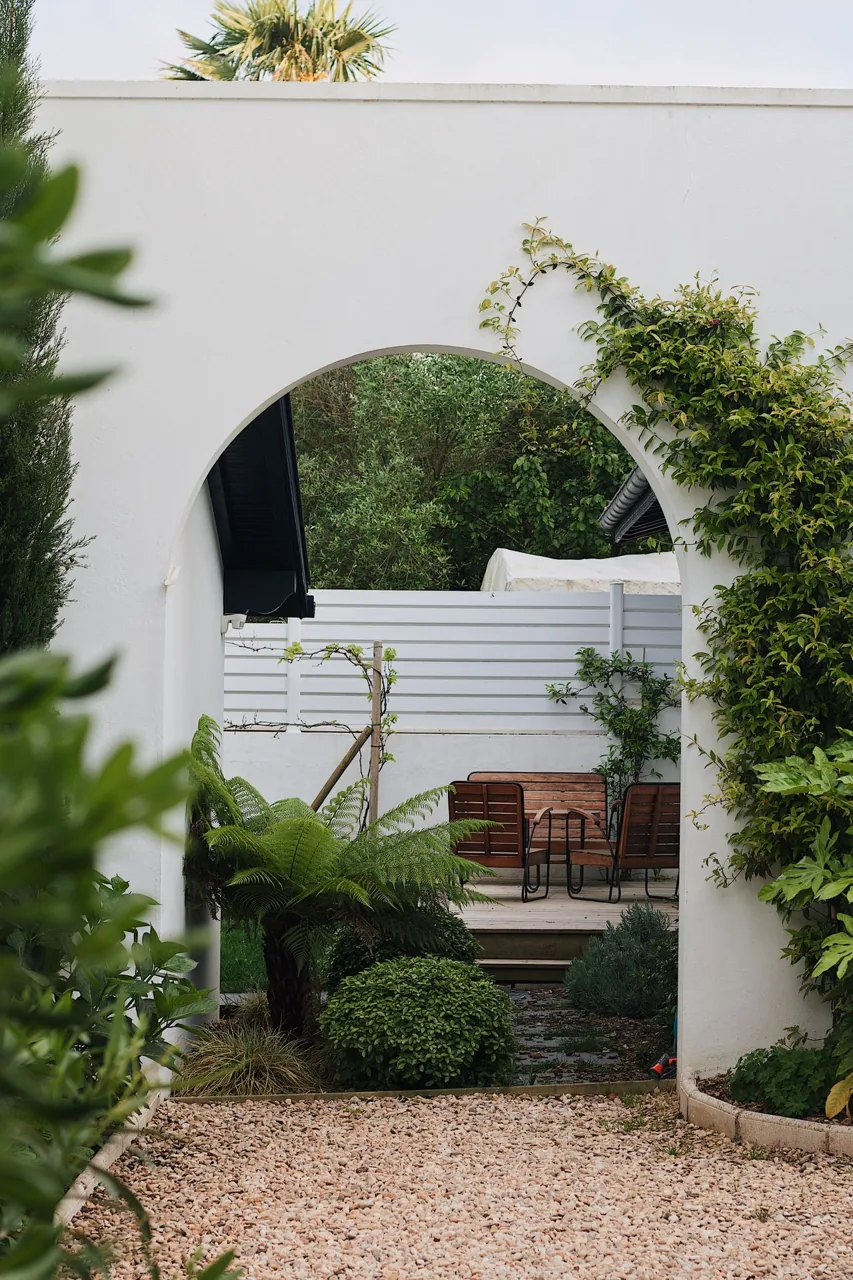
If the rooms are the rooms, the openings between them are the doors, and they deserve as much thought. A gap in a hedge framed by two clipped finials announces an arrival. A narrow opening that widens into a larger space gives a small but real thrill of release. I like to align these thresholds so that standing in one room you catch a glimpse through to the next, and beyond that to a focal point, an urn, a bench, a single pale-stemmed tree, drawing you down the garden almost without noticing.
Flow is the word for how you move through these spaces. The path should never simply run straight from end to end; it should pause, turn, change surface underfoot. A gravel terrace gives way to stepping stones in lawn, which arrive at a small paved circle. Each shift tells you, quietly, that you've crossed into somewhere new.
Holding Something Back
The best garden rooms always keep something in reserve. You should never be able to see quite everything from any one point. A bend in the path, a screen of tall grasses, a hedge that hides a bench until you're almost on top of it, these are the moments people remember. Surprise is the reward for the walk.
Start modestly. Even one division, a single hedge two-thirds of the way down with an offset opening, will transform how a garden feels. Live with it for a season, see how you use the two halves, and let the next room suggest itself. Garden rooms are rarely designed all at once; they grow, like everything else out there.