People with a three-square-metre balcony often assume that real gardening isn't for them. It absolutely is. Some of the most rewarding planting I've seen has happened on a strip of concrete five floors above a city street, where every plant has to earn its spot and the gardener notices each new leaf. A small space isn't a limitation so much as a discipline. You can't hide a mistake up there, but you also don't have to weed an acre. Here's how to make a balcony feel like a garden.
Think Vertically
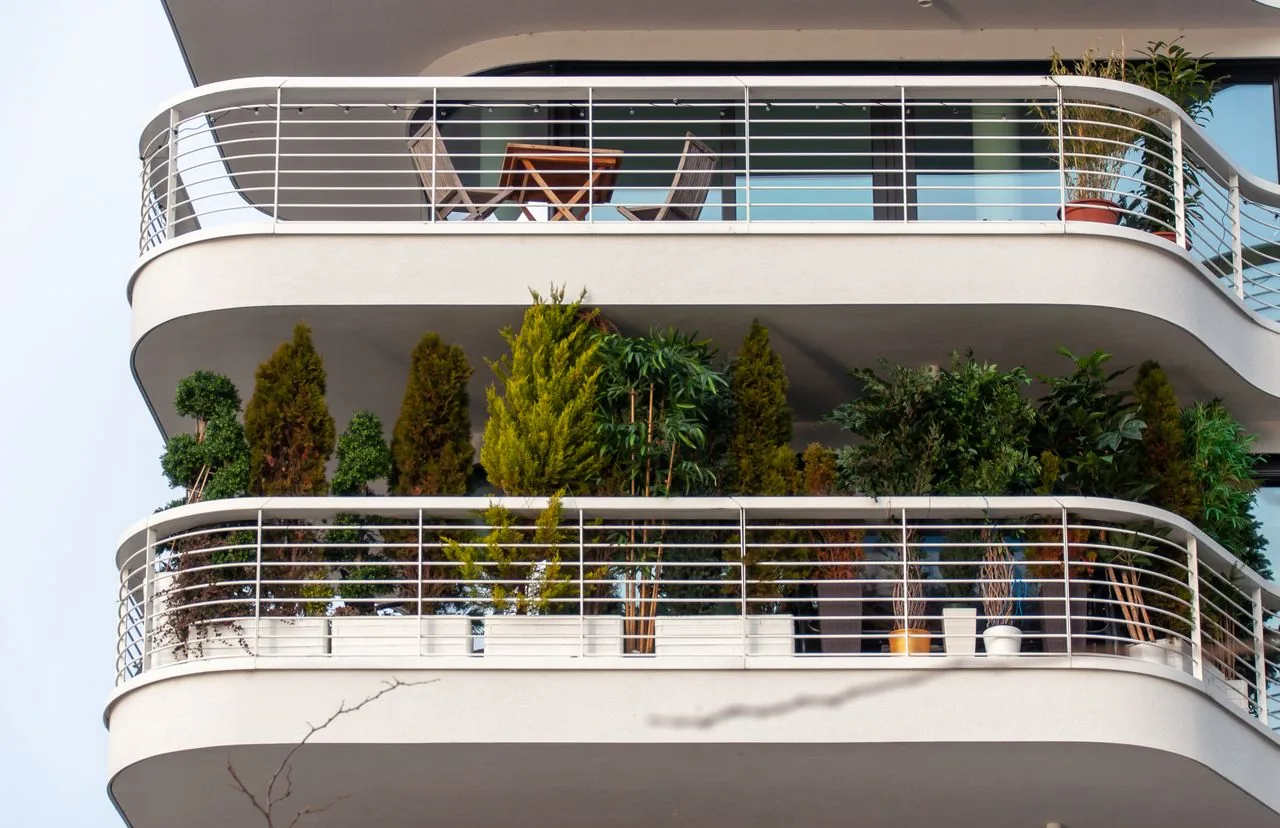
The floor is the least of your space; the real estate is on the walls and the railing. A balcony has roughly three usable surfaces, and treating the verticals as planting beds rather than boundaries instantly triples what you can grow. Wall-mounted pockets, a slim trellis of climbers, railing planters that hook over the balustrade, a tiered stand in the corner, all of these layer greenery upward and free the floor for a single chair and a cup of coffee. A climbing jasmine or a compact clematis running up a wall costs almost no footprint and gives you scent at nose height.
Trailing plants do the same trick in reverse, spilling down over the edge so the balcony reads as a cascade of green from the street below as well as from your chair. The effect is to wrap yourself in planting on every side, which is exactly what makes a tiny space feel immersive rather than cramped.
Wind, Weight and Water
Balconies have their own microclimate and it's a harsh one. Up high, wind is the great enemy, drying out pots in hours and shredding soft, large leaves. Choose tough, wind-tolerant plants, many Mediterranean herbs, grasses and small-leaved evergreens shrug it off, and group containers together so they shelter one another. It's worth checking the conditions a plant actually wants before you buy; Kew's plant profiles are a reliable place to confirm whether something will cope with full sun, exposure and life in a pot before it ends up cooking on a south-facing rail.
Two unglamorous practicalities decide whether a balcony garden survives. Weight: wet compost and large pots are heavy, so check what your balcony is rated to carry and lean on lightweight composts and fibreglass or plastic containers rather than stone. And water: pots up here dry out terrifyingly fast in summer, so generous containers (small ones bake), water-retaining compost and, ideally, a simple drip system on a timer will save you a daily evening climb with a watering can.
Edit Ruthlessly
The temptation in a small space is to cram in one of everything, and it always ends up looking like a garden centre trolley. Resist it. A balcony reads far better with a tight, repeated palette, three or four plants you really love, used in good-sized pots, than with a jumble of singletons. Pick a colour theme and stick to it. Let one or two specimen plants be the stars and keep the rest as a quiet supporting cast. A small space rewards restraint more than any other kind of garden, and a well-edited balcony can feel more complete than a half-acre that's trying to do everything at once.